Philosophy / Personal Essays
THE MOST EXPENSIVE THING YOU OWN IS A LIFE YOU CAN'T LEAVE.
On money, sacrifice, delayed gratification, and the difference between looking free and actually being free.
In this essay
Imagine two people.
Same age. Same job. Same salary.
Both exhausted after another year of working, paying bills, and trying to make something of themselves.
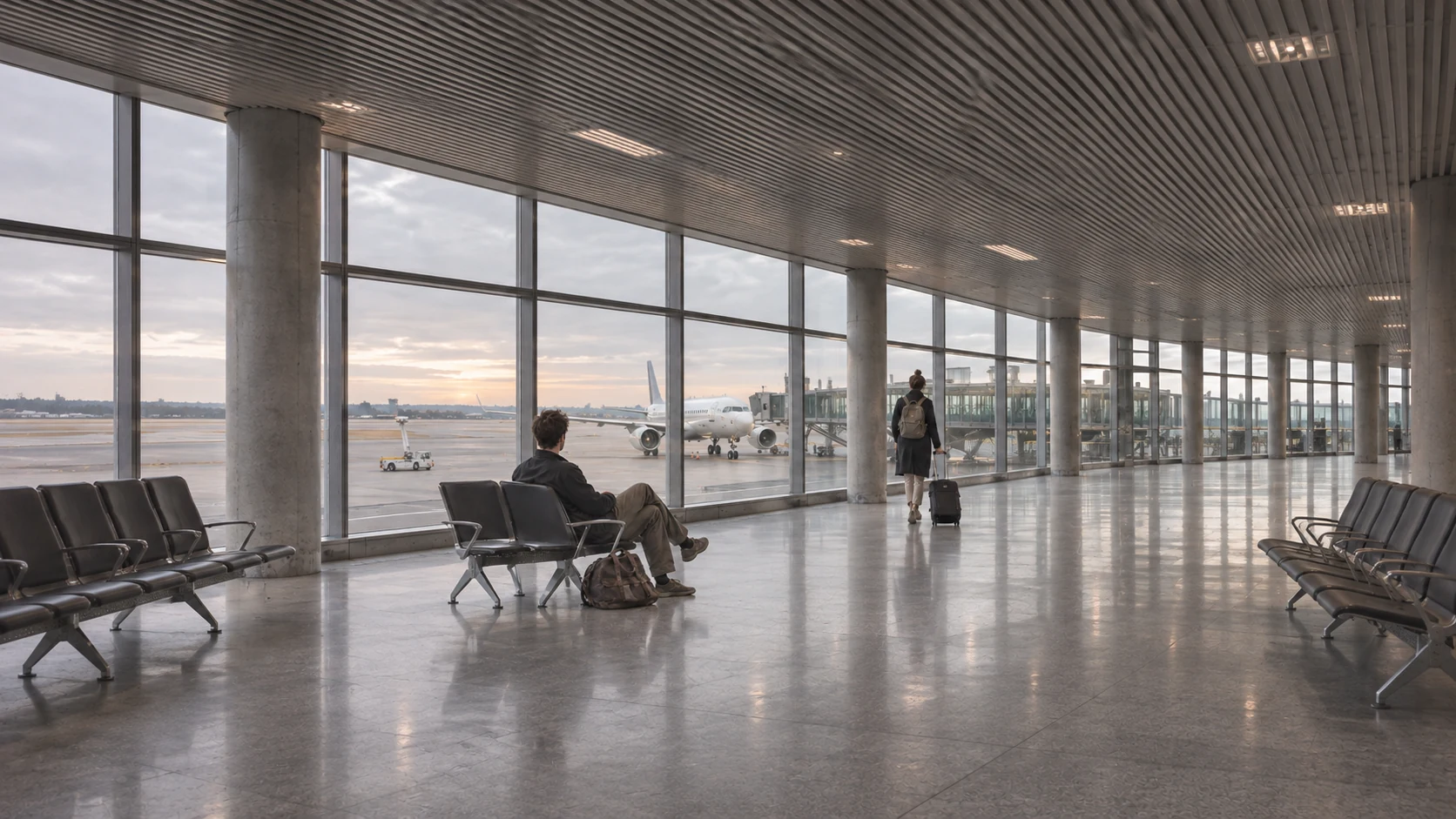
One books a flight.
Seven days somewhere beautiful.
A hotel overlooking the sea. Expensive restaurants. Cocktails at sunset. Photographs that make everybody back home a little jealous.
For one week, he feels free.
No alarm clock. No supervisor. No deadlines. No responsibilities beyond deciding where to have dinner.
And then Sunday arrives.
He packs his suitcase.
Checks out of the hotel.
Boards the plane.
And returns to a life he spent the entire holiday trying to forget.
The other person never booked the flight.
He stayed home.
Worked.
Saved.
Invested what he could.
While everyone else was posting photographs from beaches, he was building something nobody could see.
People laughed.
You never enjoy your life.
What are you saving all that money for?
You could die tomorrow.
He didn't have a particularly interesting answer.
He simply knew that he didn't want to spend the rest of his life asking somebody else for permission to take seven days off.
Years passed.
Perhaps his investments grew. Perhaps the business he built eventually succeeded. Perhaps his patience and choices gave him options he hadn't had before.
And one day, he booked a flight too.
But this time, there was something different about the ticket.
He didn't need to book a return.
It's a beautiful story.
The first person bought a week of freedom.
The second spent years trying to buy the freedom to choose how he lived.
And perhaps that's the lesson we're supposed to learn.
But I have a question.
What if the second person never makes it onto that plane?
We have confused looking rich with being free.
There is something strange about our relationship with money.
We spend money trying to convince people that we have money.
We buy things to demonstrate our success.
We go places partly because we want other people to know we've been there.
We photograph our experiences before we've even finished experiencing them.
And sometimes, we're so busy proving that we're enjoying life that we forget to ask whether we actually are.
I don't think there's anything wrong with travelling.
Or buying something beautiful.
Or enjoying an expensive dinner.
If you've worked hard for something and can afford it, enjoy it.
You don't owe anybody an apology for having a good time.
But I think there's a difference between spending money because something brings you happiness and spending money because you want other people to believe you're happy.
One is an experience.
The other is a performance.
And the problem with performing success is that the audience never stops expecting another show.
A nicer watch.
A better car.
A more expensive holiday.
A more impressive apartment.
There is always somebody with something you don't have.
And if your happiness depends on proving that you've arrived, you'll spend your entire life trying to reach a destination that keeps moving.
Being able to afford something is not the same as being able to afford the life that comes with it.
That distinction matters more than most people realize.
The real luxury isn't money. It's the ability to say no.
Think about the things people endure because they cannot afford to walk away.
A job that makes them miserable.
A workplace where they're treated without respect.
A living situation they desperately want to change.
Decisions they wouldn't otherwise make.
Not necessarily because they lack courage.
But because courage doesn't pay rent.
When you have no financial room to make mistakes, every decision becomes more expensive.
You might know that something is wrong.
You might understand exactly what needs to change.
But knowing you should leave and being able to leave are two completely different things.
And I think this is where money becomes genuinely important.
Not as evidence that you're better than anybody else.
Not as proof of intelligence.
Not as a substitute for character.
But as a means of creating choices.
The ability to refuse an opportunity that violates your principles.
The ability to take time off without everything collapsing.
The ability to help someone without immediately worrying about what it will cost you.
The ability to leave a situation because it's wrong for you, rather than remaining because you're financially trapped.
Perhaps the greatest luxury is not being able to buy whatever you want. It's not having to sell your freedom to survive.
And that is a kind of wealth I can understand wanting.
But there's something dangerous about worshipping sacrifice.
I need to challenge the second person in our story.
The disciplined one.
The patient one.
The person who refused to spend money because he was building a future.
We love stories like his.
They make us believe that enough sacrifice will eventually guarantee freedom.
Work while everyone else is sleeping.
Save while everyone else is spending.
Keep your head down.
Ignore the distractions.
And one day, you'll be able to live however you want.
Perhaps.
But perhaps not.
Because the future isn't a contract.
You can make responsible decisions and still experience financial difficulties.
You can save for years and face an unexpected emergency.
You can invest carefully and lose money.
You can spend decades preparing for a retirement you never reach.
And there's something heartbreaking about the possibility of spending your healthiest years refusing yourself every meaningful experience in exchange for a future that was never guaranteed.
Imagine finally becoming wealthy enough to travel anywhere in the world, only to discover that the people you wanted to travel with are no longer there.
Imagine having enough money to buy the house you always dreamed of, but realizing that you've spent so many years working that you've forgotten how to feel at home.
Imagine reaching financial independence and discovering that you have no interests, friendships, or relationships outside the work that got you there.
What good is owning your time if you no longer know what to do with it?
I don't want a life where I sacrifice everything today for a tomorrow that may never arrive.
But I also don't want a life where I sacrifice every possibility of tomorrow just to impress people today.
There must be something between those two extremes.
Maybe we're asking the wrong question.
People love asking:
Would you rather be rich or happy?
As though those are the only options.
As though money and happiness are enemies.
As though a person who saves must be miserable and a person who spends must be irresponsible.
But I think the more interesting question is:
How much of your life are you willing to exchange for the life you say you want?
Because every decision costs something.
If you spend money today, you may be giving up opportunities tomorrow.
If you save everything for tomorrow, you may be giving up experiences today.
If you work constantly, you might gain financial security while losing time with people you love.
If you never take your responsibilities seriously, you might enjoy extraordinary moments while creating difficulties that follow you for years.
And here's the uncomfortable truth.
There is no perfect formula.
Someone working minimum wage while supporting a family doesn't have the same freedom to save as someone earning ten times as much.
Someone living with a serious illness doesn't experience time in the same way as someone who can reasonably expect decades of good health.
And someone who has never had financial security may value stability far more than someone who has always taken it for granted.
So I don't think we should judge people by how frequently they travel or how much money they have invested.
The person on holiday might have saved responsibly for years.
The person staying home might be saving because they have no other choice.
Photographs don't tell us enough to know.
Financial wisdom isn't about spending less than everybody else. It's about making choices that reflect the life you actually want to live.
I don't want to spend my life waiting for permission to enjoy it.
I've been thinking about what success actually means to me.
And the more I think about it, the less interested I become in the traditional symbols.
Of course I want to achieve things.
I want to build.
I want to create.
I want to accomplish things that once seemed impossible.
And yes, I want financial freedom.
I'm not going to pretend money doesn't matter.
It matters enormously when you don't have enough of it.
But I don't want to become somebody whose entire existence revolves around accumulating it.
I don't want to wake up one day with an impressive bank balance and realize that I have spent my whole life postponing everything that made being alive worthwhile.
I want to be able to travel without having to escape something.
I want to work because I believe in what I'm doing, not because I'm terrified of what happens if I stop.
I want to have the freedom to spend an afternoon with someone I love without feeling that every minute needs to be productive.
I want to wake up on an ordinary Tuesday and feel that my life belongs to me.
Not to an employer.
Not to an audience.
Not to expectations I never consciously agreed to.
And not to the endless pursuit of becoming somebody impressive.
Because if the price of becoming financially free is becoming emotionally imprisoned by the pursuit of money, what exactly have I achieved?
I don't want to become so obsessed with escaping the rat race that I spend my entire life running.
The person with the return ticket might not be the one who's trapped.
Let me return to our two travellers.
The first goes away for seven days.
Then returns to work.
The second saves for years.
Then travels without a return ticket.
We assume the second person has won.
But what if the first person loves his job?
What if he enjoys returning home?
What if he has a family, friendships, and responsibilities that give his life meaning?
What if those seven days were simply a beautiful experience, not an attempt to escape an unbearable existence?
And what if the second person spent twenty years being miserable, convincing himself that life would finally begin when he had enough money?
Suddenly the story becomes more complicated.
Because freedom is not necessarily the absence of a return ticket.
Sometimes freedom is being able to return to a life you genuinely love.
And perhaps the most important distinction isn't between the person who travels for a week and the person who travels forever.
Perhaps it's between someone who is choosing their life and someone who feels trapped inside it.
A return ticket is not evidence of imprisonment. Sometimes it's evidence that you have somewhere worth returning to.
I think that's beautiful, too.
Don't buy freedom at the cost of your entire life.
I still believe in discipline.
I believe in patience.
I believe in making sacrifices for things that matter.
I believe there is something powerful about refusing immediate gratification when you know it could cost you a future you genuinely want.
But I don't believe suffering is proof that you're making the right decision.
And I don't believe happiness is something we're supposed to postpone indefinitely.
Save your money.
Build something meaningful.
Learn how investing works.
Avoid spending simply to impress strangers.
Create financial security wherever your circumstances allow.
But call your friends.
Visit the people you love.
Take the occasional trip if you can genuinely afford it.
Buy the book.
Go for a walk.
Enjoy an ordinary afternoon without calculating how much more productive you could have been.
Because the life you're trying to build is happening while you're building it.
Not afterward.
Not once you're wealthy.
Not once you've achieved everything.
Right now.
And there is something terribly sad about being so committed to your future that you become a stranger to your present.
So perhaps the goal isn't to become the person who never needs to buy a return ticket.
Perhaps the goal is to become the person who can decide when to leave, when to return, and what makes either choice worthwhile.
I don't want to spend my entire life paying for seven days of freedom.
But I don't want to spend my entire life saving for freedom, either.
I want to build a life I don't constantly need a holiday from.
A life where success doesn't require abandoning everything I love.
Where money creates opportunities rather than becoming the only thing worth pursuing.
Where sacrifice has a purpose.
And where freedom isn't simply the ability to leave everything behind.
It's the ability to choose what deserves to remain.
Because one day, whether we have millions in the bank or almost nothing at all, our time will run out.
And I wonder whether we'll regret the money we didn't earn.
Or the moments we convinced ourselves we couldn't afford to live.
Maybe the answer is different for everyone.
But here's mine.
I don't want to be rich enough to escape my life.
I want to be free enough to love the life I'm living.
Samir Seddiqi
7 November 2026
The conversation continues
Leave a thought.
What stayed with you? You’re welcome to leave a few words.
Loading the conversation…