Personal Essays / Society
WHY NOT?
We were not born to spend our lives apologizing for wanting a better world.
In this essay
There is a particular arrogance in asking a generation to be patient while steadily shrinking the life it is supposed to wait for.
Study hard. Work harder. Pay the rent. Keep up with the bills. Be grateful for the job, the roof, the small piece of ground you have managed to hold. And if, somewhere between one payment and the next, you begin to suspect that being alive ought to mean more than remaining solvent, somebody will tell you to grow up.
I am twenty-two. I am willing to learn a great deal about the world. I am not willing to learn how to stop wanting a better one.
Growing up should not mean learning to live without hope.
The life we are told to settle for
I keep returning to the word realistic. It can be a useful word. It can ask us to examine the evidence, to understand a difficulty, to distinguish a promise from a plan. But listen closely to how often it is used to end a conversation before that conversation has begun.
A decent home? Be realistic. An education that opens a life rather than becoming another obstacle within it? Be realistic. A political future in which young people have something more substantial than permission to watch? Be realistic.
There is a difference between understanding the limits of the present and agreeing that those limits should become the shape of the rest of our lives.
We are told to study so we can work. To work so we can pay. To pay so we can survive. Then tomorrow arrives, carrying another bill, and the whole arrangement begins again.
Somewhere along the way, the future became a bill.
I do not think a person becomes ungrateful by noticing this. Gratitude for what we have and anger at what is being denied to others can inhabit the same heart. Mine do.
So yes: why the fuck not demand something better?
Why should the signature of a minister bring an argument to an end? Why should a decision become unquestionable because it has passed through the correct building? Familiarity can make an arrangement feel permanent. It cannot make that arrangement just.
We are allowed to ask who benefits. We are allowed to ask who pays. We are allowed to look at something that has always been done and ask whether it deserves to continue.
What a crowd can remind us
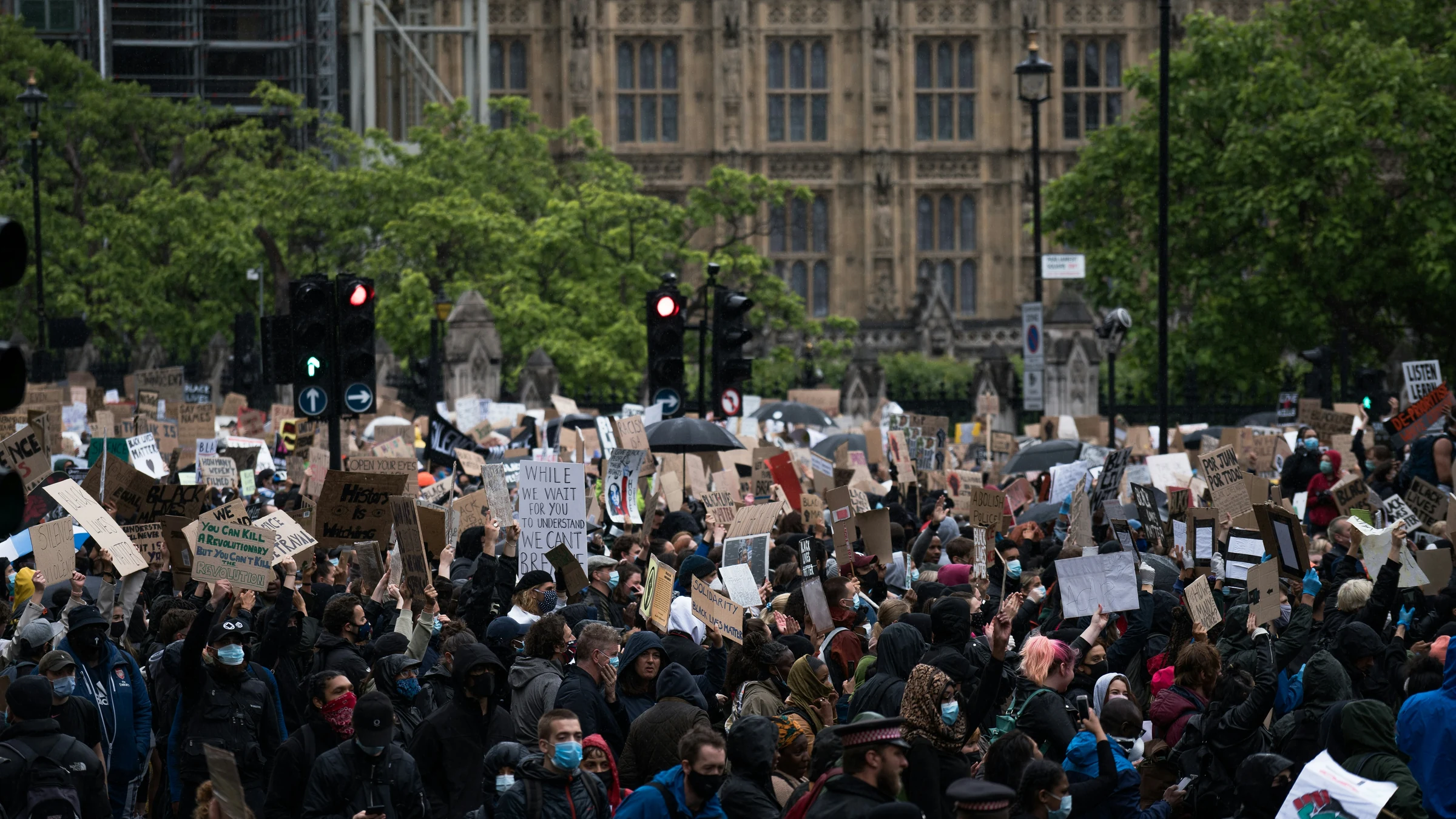
When people gather in the streets of Europe, they bring different lives with them. Different grievances, different loyalties, different ideas about what should happen next. A crowd is never as simple as a photograph makes it look.
I do not believe every slogan. I do not mistake volume for wisdom. And I have no interest in pretending that standing among thousands of people relieves anyone of the responsibility to think.
But there is something in the act of showing up that I refuse to dismiss.
Someone has decided that a private frustration must become a public question. Someone has given up an afternoon, taken a risk, stood beside a stranger, and said: this concerns me too. For a moment, people who are usually spoken about become people who can be heard.
To those who do this peacefully, who organize, who ask difficult questions, who keep working when the crowd has gone home: thank you.
You remind us that citizenship continues after the ballot has been folded and put away. It lives in scrutiny, in argument, in organizing, in the stubborn insistence that institutions answer to the people whose lives they shape.
We can disagree with a demonstration and defend the right to hold it. We can value an institution and demand better of it. A democracy should be large enough to contain both of those thoughts.
The country I carry into this argument
I was born in Afghanistan. Today I live in Europe. I study at a university and work on building a company. I can publish these words under my own name. I can question an idea, change my mind, make a mistake, begin again.
I am allowed to fail while chasing a dream.
I try not to let that sentence become ordinary to me.
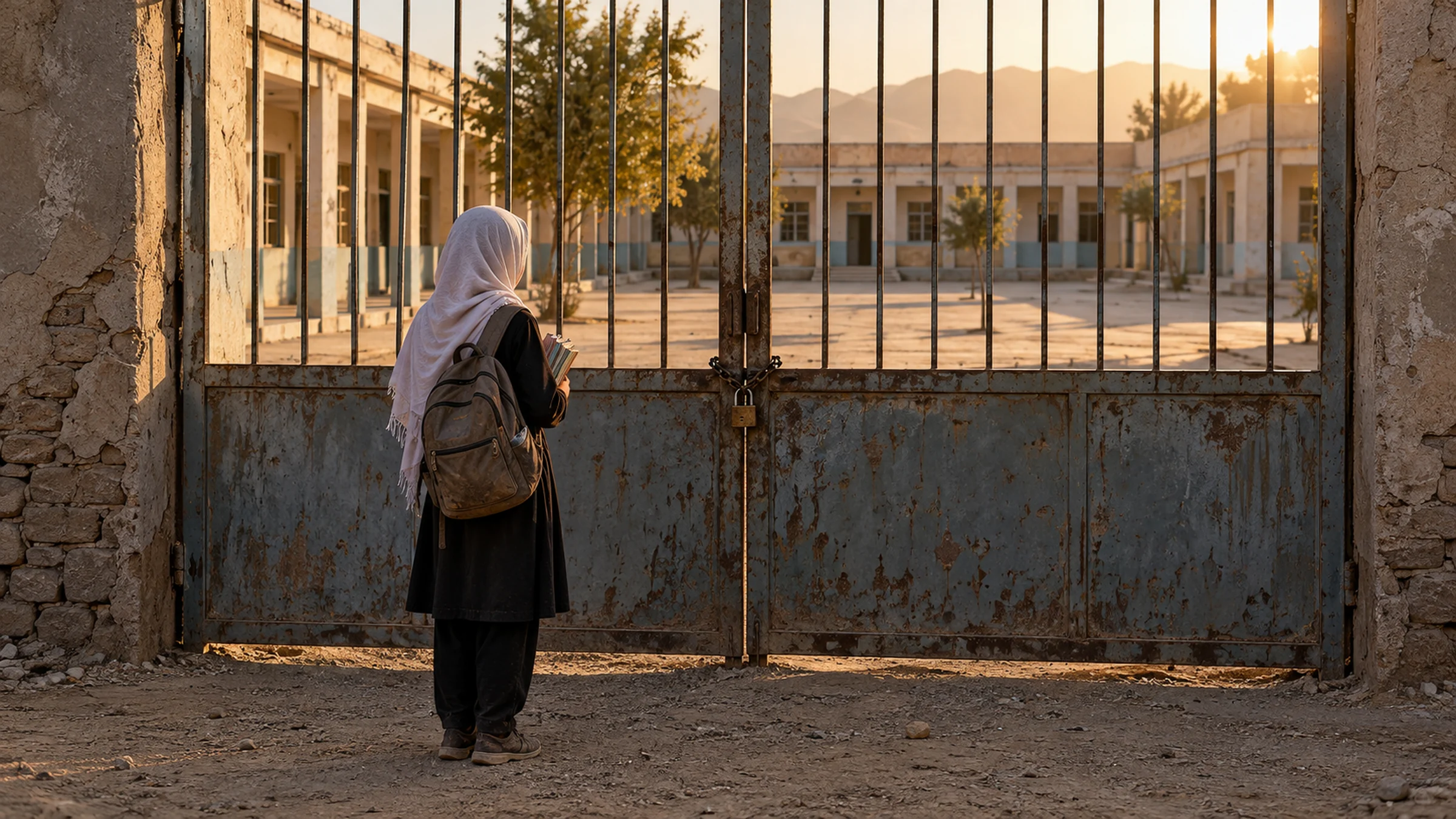
There are girls in the country where I was born who are denied the chance to enter a secondary-school classroom. The possibility I am trying to make something of is a possibility they are being refused.
I do not bring Afghanistan into this argument to make Europe's problems equivalent to its own. They are not. I bring it because the freedom to question authority is precious to me, and because I cannot regard that freedom as a decoration: something to admire in a speech and put away when the questions become inconvenient.
A right has to be able to survive the moment someone uses it in a way that makes us uncomfortable. Otherwise, we have offered approval where we claimed to offer freedom.
I do not want to live in a society that asks people to prove their love for it by remaining silent.
Sometimes the most faithful thing you can do for a place is demand that it live up to its own principles.
Give anger somewhere to go
I am angry. I am angry that ambition can feel like a luxury; that people are asked to lower their expectations before those with power are asked to account for the conditions they have created; that suffering we could address is so often described as though it were weather.
But I know how little anger accomplishes when we ask it to do the work of everything else.
A broken window is not a changed law. Frightening an ordinary person does not make that person free. And there is nothing brave about directing our frustration toward a neighbour, a migrant, a minority, or anyone else with less power than the people making the decisions.
If we are serious about a different future, we owe it more than our outrage.
We owe it evidence. The unglamorous work of organization. The patience to understand what needs to change and the courage to confront those who can change it. We owe it the discipline to question a leader even when that leader has learned to speak in a voice we like.
A movement that demands a voice for itself while trying to silence someone else has misunderstood freedom.
Human dignity cannot be the prize we reserve for the people who stand on our side. It has to be the ground beneath the whole argument.
A defence of being called naive
I have been told to be realistic in enough different ways to recognize the invitation. Wait. Accept. Understand that the world is complicated. Learn to want a little less.
Of course the world is complicated. I study, I work, I try to build something. I have no reason to imagine that a difficult problem becomes simple because I feel strongly about it.
But complexity is a reason to pay closer attention. It is a poor excuse for surrender.
The institutions we live with were built by human beings. The laws were written by human beings. What we call normal is full of decisions made by people who were no less human, and no more entitled to the future, than we are.
Those decisions can be examined. They can be challenged. They can be changed.
There is no guarantee that a protest will succeed, that a generation will agree, or that courage will be rewarded. I cannot offer that certainty to anyone, including myself. The absence of a guarantee does not erase the reasons to try.
Hope is not the belief that we will win. It is the refusal to let fear make every decision for us.
Call that naive if you need to. I can live with the word. I would find it harder to live with the knowledge that I had made a virtue of expecting nothing.
What I want to be able to say
One day, someone younger than us will ask what we did when we knew things could be better.
I wonder what we will reach for then. Whether we will have explanations ready: the difficulty of it all, the people who disappointed us, the certainty that nothing would have changed anyway. Whether we will describe our powerlessness so convincingly that we almost forget the moments when we chose it.
I want to have a different answer.
I want to say that we listened. That we questioned decisions made in our name. That we defended the freedom of people we did not agree with. That we learned enough to become useful, and built something capable of surviving the anger that first moved us to begin.
I want to say that we failed without making failure an excuse to disappear.
None of us are free until all of us are free.
Not only those born on the right side of a border. Not only those with enough money to wait. Not only those whose voices arrive already amplified. All of us.
I do not want to hand the next generation an instruction manual for surviving our mistakes and call it an inheritance. I want us to leave them more room to live.
So when somebody tells me that wanting a more dignified, more accountable, more human world is unrealistic, I think of the girl outside a classroom, the student asking a difficult question, the worker who has finally decided to speak, the people still organizing after the square is empty.
And I have one question left.
WHY NOT?
Samir Seddiqi
19 October 2026
The conversation continues
Leave a thought.
What stayed with you? You’re welcome to leave a few words.
Loading the conversation…